How Injuries Affect Match Predictions
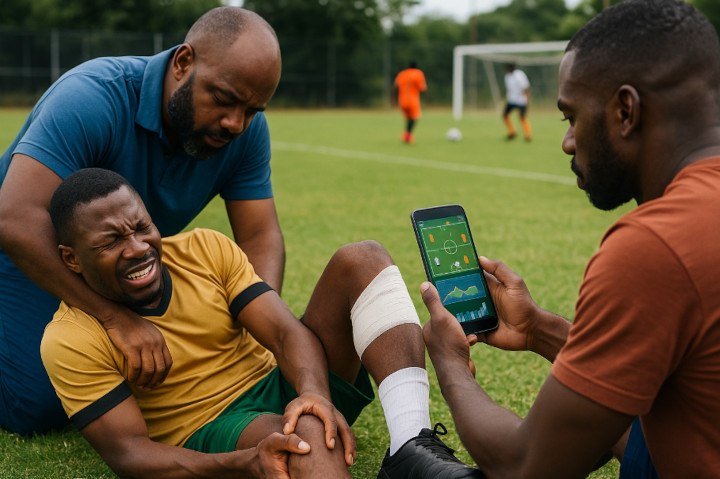
In betting history, injuries have always been the invisible variable shaping results. Decades ago, when newspapers printed morning odds, a late injury could change everything. Modern platforms now update instantly, yet the uncertainty remains the same. The absence of a single player still alters the logic of forecasts, turning one team’s balance into another’s opportunity.
In professional betting circles, the timing of injury news matters as much as the injury itself. Traders follow updates from medical staff, sports journalists, and even training videos. Patterns form around how certain clubs manage players’ recovery cycles. These changes ripple through markets, moving odds within minutes. Such sudden volatility often reminds analysts of reflex-based prediction systems like the play jetx online, where every small variable shifts the outcome faster than human reaction.
Years ago, teams fielded their best eleven every match. Injuries forced managers to improvise with whatever was available. Modern betting relies on knowing replacements, substitutes, and tactical depth. Predictors who understand how an injury affects system play can adapt faster and profit longer.
Injury Information Sources
The key to using injury data effectively lies in its quality. Some bettors use specialised platforms that list expected absences and recovery stages. Others cross-check local media, social networks, or statistical databases. Reliable data helps identify shifts before bookmakers adjust.
Common ways professionals monitor injury impact include:
- Tracking official team updates and press conferences
- Reviewing historical performance without the injured player
- Analysing replacements’ metrics in the same position
- Watching training videos or friendly matches for hints
This precision separates experienced analysts from casual punters. The earlier one confirms a player’s absence, the better their odds position.
Influence Across Sports
Each sport reacts differently to player absences. In football, a missing defender can change entire strategies. In basketball, a single injured playmaker alters rhythm and pace. Tennis and boxing face more direct consequences, as physical strain decides performance. The betting impact depends on both visibility and timing - some injuries remain hidden until warm-ups, creating instant line shifts.
In horse racing, injury updates are even more delicate. Trainers rarely reveal full details, leaving bettors to interpret form changes. This uncertainty drives constant re-evaluation of information sources.
Market Behaviour and Bettor Psychology
Injury news often triggers emotional reactions. Some bettors overestimate its influence. The most successful ones stay neutral. They adapt models, reassign probability weights, and compare team efficiency with and without the affected player.
Experienced bettors usually:
- Evaluate recovery timelines to predict future market corrections
- Avoid emotional trading after dramatic injury news
- Reassess value bets when public perception exaggerates the effect
Emotions distort reasoning more than missing athletes do. Analysts aware of that gain long-term consistency.
Historical Context and Evolution
For many decades, injury tracking was manual. Digitalisation changed this structure. Algorithms now process player data, medical updates, and travel schedules. The integration of biomechanics in sports medicine further refined injury forecasting. Predictive accuracy improved, yet unpredictability persists.
In modern analytics, an injury does not always mean decline. Sometimes, substitutes bring fresh dynamics. Younger players often play with less pressure, surprising both fans and bettors. Adaptation remains the key measure of competitive balance.
Strategic Application in Predictions
Professional traders treat injury data as part of a larger model. They integrate it with tactical style, fixture congestion, and player fatigue. The goal is not to predict the result but to measure probability more precisely. Even minor knocks or suspensions influence how teams press, defend, or counterattack. Each injury reshapes expected goals, shot volume, and passing flow.
Some analytical models assign percentage value to each absence, allowing weighted adjustments. Over time, consistent tracking builds knowledge, not luck. Successful bettors often maintain private archives of injury effects, sorted by player and competition.
Practical Insights from Modern Betting
The impact of injuries reveals how fluid betting analysis has become. A sprained ankle in training can shift millions in market volume. Yet those who approach it with research, discipline, and calm benefit the most. In the long run, information timing outweighs speculation.
Reliable approaches include:
- Correlating match tempo with missing players’ styles
- Using live statistics to see real-time tactical changes
- Comparing early and final odds to measure reaction time
Injuries connect the unpredictable nature of sport with the precise logic of betting. They remind traders that even the best analysis must accept randomness. Every unexpected absence rewrites numbers, testing patience and adaptability. Betting, like sport itself, thrives not in certainty but in how one responds to change.